

Why Kolhapuri Sandals Work for Every Occasion, Not Just Ethnic Wear
There is a version of the Kolhapuri sandal that has been sitting in Indian wardrobes for centuries. And for most of that time, it has been treated as occasion footwear - something you reach for with a kurta, a saree, or a lehenga, and put away everything else. That framing is too narrow, and most women who own a good pair already know it.
The Kolhapuri works across more contexts than it gets credit for. The silhouette is flat, open - which means it pairs as naturally with wide-leg trousers and linen sets as it does with ethnic wear. The craft makes it interesting enough to carry a simple outfit without trying too hard. That combination - versatile shape, strong detail - is what makes it worth wearing year-round, not just during wedding season.
Kolhapuri Sandals for Ethnic Wear
This is where most people begin, and rightly so. A Kolhapuri paired with a cotton kurta set, a printed anarkali, or a festive lehenga is a combination that has worked for generations - because the handcrafted style of the sandal speaks the same visual language as handwoven or hand-block-printed fabric.
For mehendi and haldi functions, embroidered and sheesha Kolhapuri flats are comfortable enough for outdoor settings and long afternoon functions, and they carry enough craft to look intentional alongside festive outfits. Plain and two-tone styles in tan or earthy tones are the easiest daily ethnic wear decision you can make - they move between kurtas, cotton co-ords, and casual dupattas without any effort. For heavier occasion dressing - silk sarees, sharara sets, festive lehengas - embellished and cutdana Kolhapuris carry the detail so the outfit does not have to work harder.
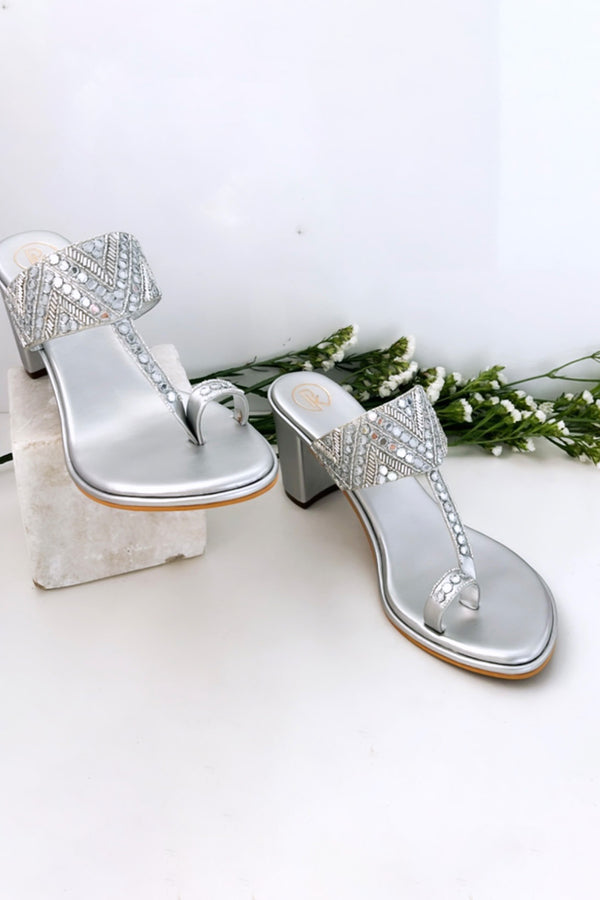
Styling Kolhapuri Flats With Western Outfits
This is where the sandal surprises people. A Kolhapuri flat works with western silhouettes because the shape is inherently clean - flat sole, open toe, strap - and the handcrafted detailing reads as a deliberate design choice rather than an ethnic marker.
Wide-leg trousers with a fitted shirt. Midi skirts in solid or printed fabric. Straight-cut jeans with a relaxed linen top. Linen co-ord sets for weekend wear. In all of these combinations, a Kolhapuri flat adds texture and craft without pulling the outfit in any specific direction. Two-tone and colour block styles work particularly well with western silhouettes - the dual colourway carries the visual interest so the clothing does not need to. Printed Kolhapuris - floral, denim, nature-inspired motifs - do the same when worn with simple, solid-coloured pieces.
The key is to let the sandal be the detail. Keep the rest of the outfit simple, and the pair does the work. Tonal combinations are the easiest starting point - a tan Kolhapuri with warm neutrals, a metallic style with a monochrome outfit, a dark Kolhapuri with earth tones.
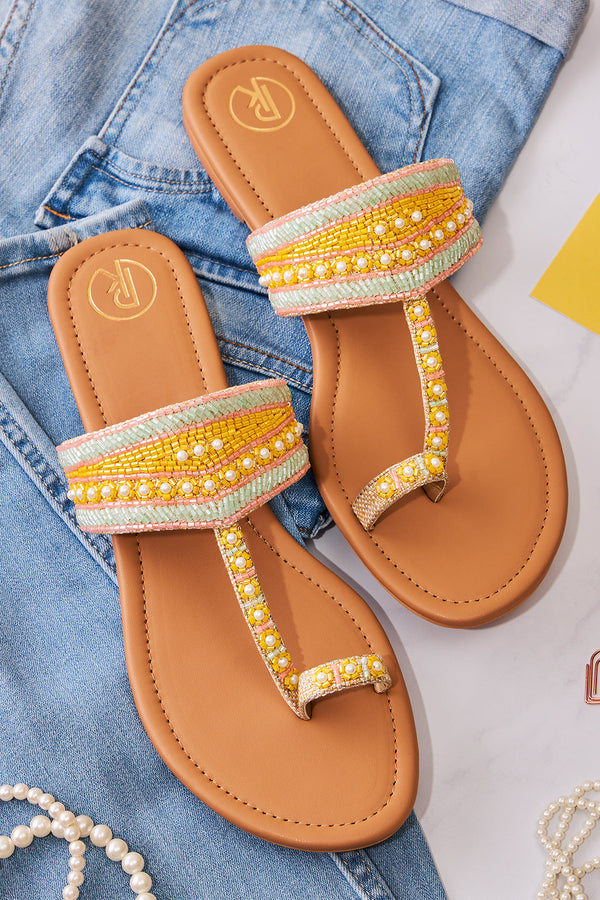
Kolhapuri Sandals for Everyday Casual Wear
The most underused version of this sandal is also the most practical one. A plain or two-tone Kolhapuri sandals for daily wear - errands, coffee, markets, casual outings - is comfortable across long days, durable across seasons, and more visually interesting than most flat alternatives at the same price point.
The open style keeps feet comfortable across extended wear. The flat base means no fatigue from heel pressure. And the handcrafted detail means you are not reaching for the most forgettable pair in your wardrobe every time you leave the house. Plain Kolhapuris in tan, navy, or maroon slot into a daily wardrobe without requiring outfit planning around them. Two-tone styles add enough visual interest to elevate a simple everyday outfit without looking overdressed.
For daily rotation, plain and two-tone Kolhapuri flats are the ones worth investing in first.
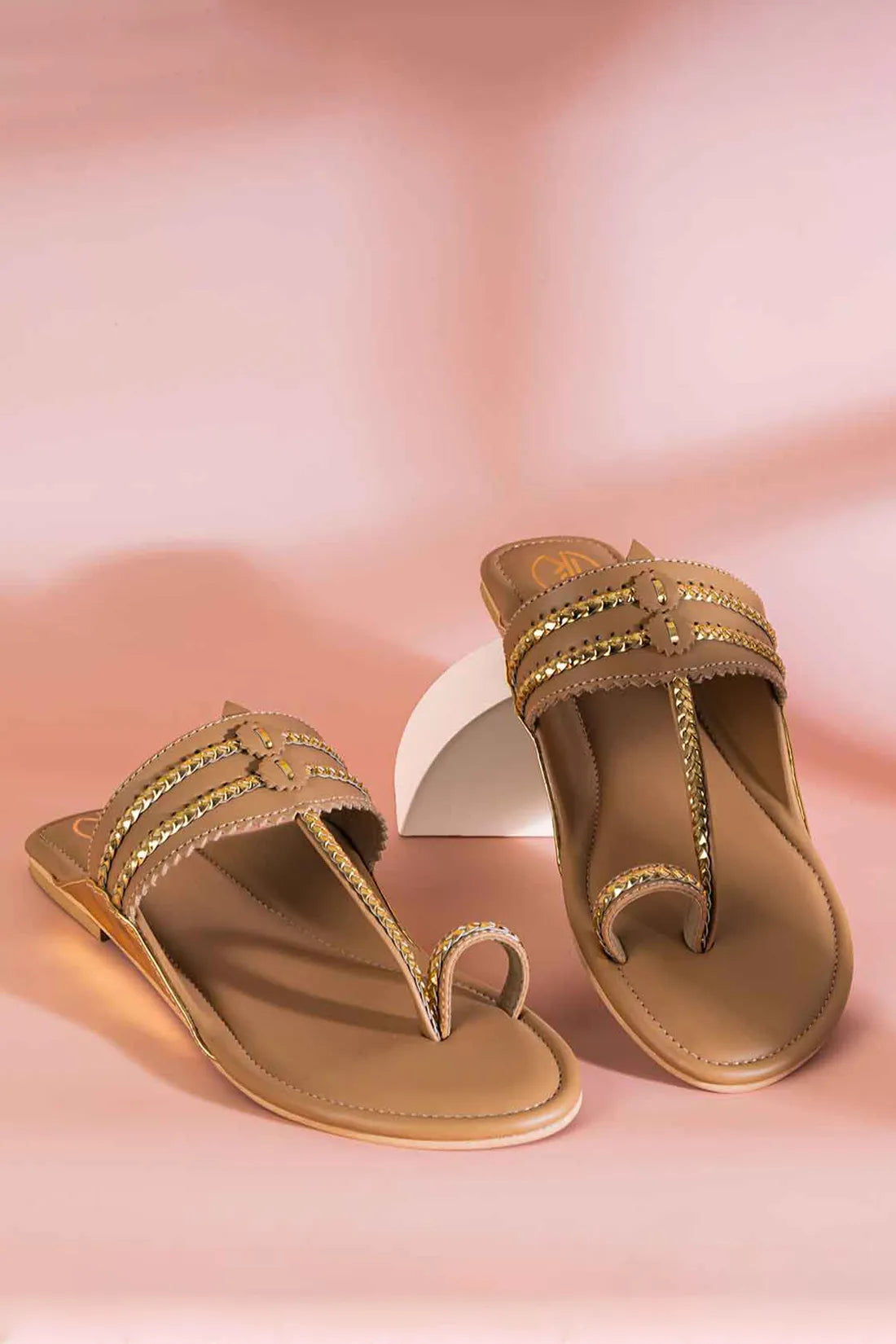
Occasion and Festive Dressing With Kolhapuris
Kolhapuri sandals earn a place at occasions beyond the wedding circuit. Festive dinners, family gatherings, office celebrations, Diwali parties, and summer events all call for footwear that is polished without being formal. A flat Kolhapuri with embellishment, metallic tones, or mirror work sits exactly in that space.
Sheesha and embellished Kolhapuris work for reception dressing when paired with a lehenga or saree where the hem grazes the floor - the sandal reads as occasion footwear without needing a heel. Metallic two-tone styles in gold or silver are the easiest choice for festive dinners and family gatherings - versatile enough to pair with both ethnic and fusion outfits. For evening functions where some height makes visual sense, the block heel Kolhapuri carries the traditional strap style on a stable base - crafted enough for occasion dressing, comfortable enough for extended wear.
If the function is longer than three hours or involves outdoor time, a flat embellished Kolhapuri is almost always the more practical and more comfortable choice - with no visual compromise.
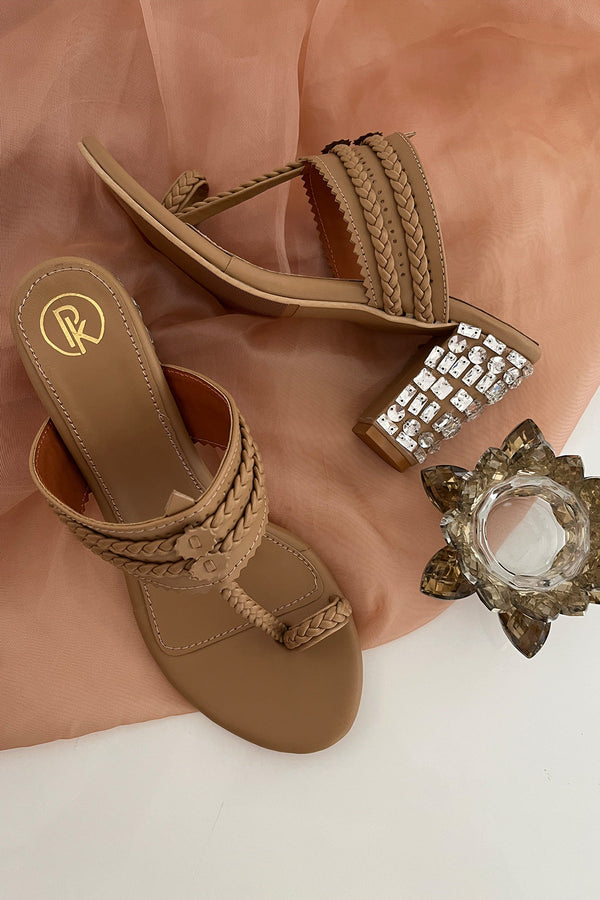
Why the Kolhapuri Belongs in Every Indian Wardrobe
Most footwear trends have a season. Kolhapuri has several centuries. Part of that is cultural weight - it carries a heritage that most sandal silhouettes simply do not have. But a larger part is that the design is genuinely good. Flat, open, handcrafted - these are not trend-specific qualities. They are the qualities that make footwear last in a wardrobe and look right across the widest range of occasions and outfits.
At Preet Kaur, every Kolhapuri is handcrafted in limited quantities by skilled artisans - which means more deliberate detailing and more consistency in finish across pairs. The full collection is vegan, with no leather or animal-derived materials, built for women who want the craft and cultural weight of a traditional Kolhapuri without the material compromises. Across the range - from plain everyday flats to heavily embellished occasion styles - the sandal holds up across full-day wear in a way that most footwear does not.
FAQs
Can Kolhapuri sandals be worn with western outfits?
Yes. Kolhapuri flats pair well with wide-leg trousers, midi skirts, linen co-ords, and straight-cut jeans. The flat, open silhouette works across western and ethnic outfits - keep the rest of the outfit simple and let the sandal carry the detail.
Are Kolhapuri sandals comfortable for all-day wear?
A well-made Kolhapuri flat with a cushioned footbed is comfortable across extended wear. The open syle keeps feet cool, and the flat base removes the fatigue that comes with any heel height. Look for padded insoles and secure strap before buying.
Are Preet Kaur Kolhapuri sandals made up of leather?
No. Every pair in the Preet Kaur collection is fully vegan - no leather, no animal-derived materials or adhesives. The sandals are handcrafted using quality vegan fabrics and finished to the same standard as traditional Kolhapuri styles.
What occasions are Kolhapuri sandals suitable for?
Kolhapuri sandals work across mehendi and haldi functions, festive dinners, casual daily wear, and western occasion outfits. They are particularly well-suited to outdoor functions and longer events where comfort across several hours matters as much as how the sandal looks.
