

How to Pick Footwear That Survives a Full Day of Karwa Chauth and Diwali
Most women default to the same festive footwear plan every year. Buy the heels that match the outfit, wear them for the photos, then quietly switch to slippers the moment guests leave. On Karwa Chauth this turns into a real problem, not a small one. A fasting body swells slightly by evening, feet included, and a shoe that fits fine at 9 am can pinch by 7 pm. What if the heel height was wrong. What if the strap digs in right when the moon sighting begins.
Diwali carries its own version of the same mistake. Multiple days, multiple outfits, and somehow one pair of heels gets forced into every single evening. The problem was never wanting to look festive. The problem is choosing footwear only for how it looks in a mirror, and never for how it holds up across eight or nine hours of standing, walking between rooms, and greeting people at the door.
What footwear works best for a full day of Karwa Chauth fasting and puja?
A low block heel or a well cushioned flat works best, because it keeps the foot stable without adding pressure through a day the body is already running on empty.
On a fasting day, blood sugar dips and balance gets a little less reliable by mid afternoon. A block heel raises height without shifting body weight forward onto the toes the way a stiletto does. Flats work just as well if the sole has some structure to it, rather than being completely flat and unsupported for hours of standing during puja preparations.
Why do heels feel harder to wear on an empty stomach?
Fasting changes how the body carries weight and manages mild swelling, so a shoe that feels secure in the morning can feel noticeably tighter by evening.
Lower fluid intake through the day often leads to slight swelling around the ankles and the ball of the foot by evening. A heel that was snug at breakfast time can start pressing in exactly where it should not, right as the evening puja and moon sighting begin. Choosing a shoe with half a size of extra room, rather than an exact fit, avoids this entirely.
Can flats still look festive enough for Diwali evenings?
Yes, as long as the embellishment or embroidery does the work a heel usually does for a festive look. Something from the festive sandals collection built specifically for evening gatherings covers this easily, without asking anyone to trade comfort for shine.
Diwali evenings involve a lot of standing near the entrance, greeting guests, and moving between the puja room and the living area. A flat with stonework, zari, or a metallic strap photographs just as well as a heel in most lighting, and it holds up far better over a five hour evening. The trick is picking a flat with visible detailing on top, since that is what gets noticed, not the height of the sole.

What is the difference between block heels and stilettos for standing through puja?
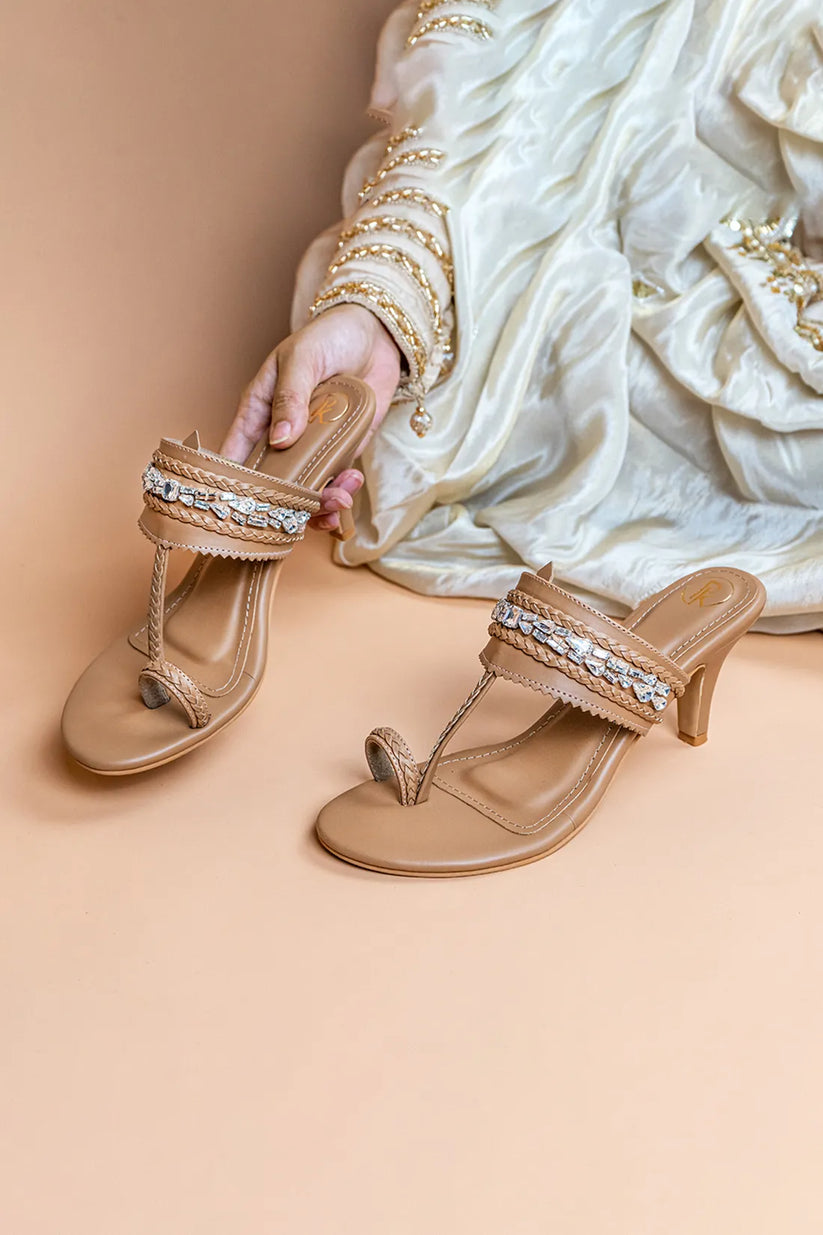
A block heel spreads body weight across a wider base, while a stiletto concentrates it onto a single narrow point, which is why one still feels fine after two hours and the other does not. For puja days specifically, the kolhapuri block heels collection keeps balance steady through long stretches of standing and photographs.
A narrow heel tip also means less contact with the ground, which matters on marble floors, tiled courtyards, or uneven outdoor spaces where a lot of Karwa Chauth and Diwali rituals actually happen. A wider heel base is simply harder to twist an ankle in.
How do you match footwear across multiple Diwali days without buying five pairs?
Pick two or three versatile pairs that shift between casual and festive with a change of outfit, instead of buying one pair for every single day. Denim sandals pair surprisingly well with silk and georgette outfits during the daytime rituals, then a dressier pair can carry the evening events.
A neutral gold or nude pair covers most evening outfits without clashing, and for the busiest Diwali days, the tie-up sandals collection keeps the strap snug through hours of walking between the kitchen, the puja room, and the front door.
Are embellished sandals durable enough for daily festive wear?
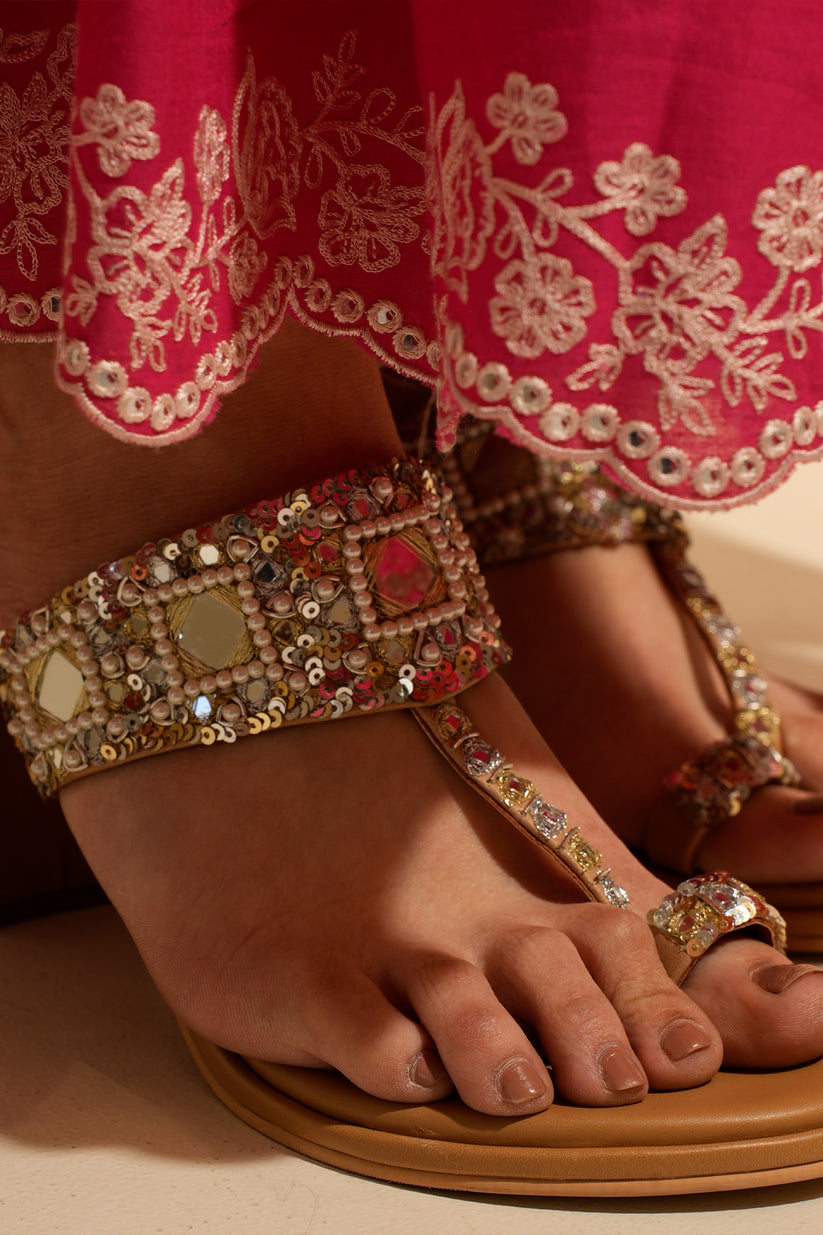
Handcrafted embellished sandals with stitched detailing hold up far better than mass produced pairs where the embellishment is only glued on, since glued stonework tends to shed after two or three wears. For extra polish without added weight, the hand embellished heels collection is built to last through a full week of festivities.
Stitched embellishment moves with the fabric or leather instead of sitting rigidly on top of it, so it survives being tucked into a car, walked across a courtyard, or brushed against a lehenga hem without loosening.
What should you check before buying festive footwear online for Karwa Chauth or Diwali?
Check the sole material, strap adjustability, and heel height before anything else, because product photos rarely show how a shoe actually sits on the foot after three hours of wear.
A rubber or cushioned sole matters more than the outer material for anyone who will be standing through a puja or moving between rooms hosting guests. Adjustable straps allow for the mild swelling that comes with fasting or a long evening, and a heel under two and a half inches keeps balance in check on uneven flooring. Reading the size chart against actual foot measurements avoids most return requests.
Frequently Asked Questions
Q: How many hours can comfortable festive sandals be worn without foot pain?
A: A well fitted block heel or cushioned flat can comfortably last 8 to 10 hours, which covers a full Karwa Chauth day or a long Diwali evening. Fit and sole cushioning matter more than the height of the heel itself.
Q: Is it okay to wear flats for Karwa Chauth puja instead of heels?
A: Yes, flats are completely acceptable and often more practical, especially for the evening puja when standing for a stretch of time is common. An embellished or embroidered flat keeps the festive look without sacrificing comfort.
Q: What heel height is safest for standing through a Diwali evening?
A: Anywhere between 1.5 and 2.5 inches in a block or wedge shape is the safest range for a long evening. Anything taller or narrower starts to strain the balls of the feet after two or three hours.
Q: Do handcrafted vegan leather sandals need a break-in period?
A: A short one, usually a day or two of light wear around the house before the actual event. This softens the strap edges and lets the sole shape itself to the foot, so nothing feels stiff mid puja.
Q: Can the same pair of sandals be styled for both Karwa Chauth and Diwali?
A: Yes, especially in neutral tones like gold, brown, or nude, since these pair with both traditional puja outfits and brighter Diwali evening wear. One well chosen pair often does more work than five outfit specific ones.
