

How to Choose the Right Ethnic Heels for Every Wedding Function
Most women buy one pair of heels and expect it to work for every function on the calendar. The haldi, the sangeet, the reception, all in the same silver stiletto that looked perfect in the shop and hurt by the second hour.
The heel itself is rarely the problem. It is the assumption that one style can carry six different occasions, six different outfits, and six different floor surfaces. Festive dressing works better when the heel is chosen for the event, not just the outfit.
What actually makes a heel work for a full day of festivities?
A heel works for festive wear when the sole distributes weight evenly and the strap holds the foot without cutting in after hours of standing. Stilettos concentrate pressure on a single point, which is fine for a two hour dinner and punishing for a six hour sangeet.
Block and wedge soles solve this by spreading contact across a wider base. the heels collection covers formal options from block to stiletto styles, so the choice comes down to how many hours the shoe actually needs to survive.
Which ethnic heels suit a daytime function versus an evening one?
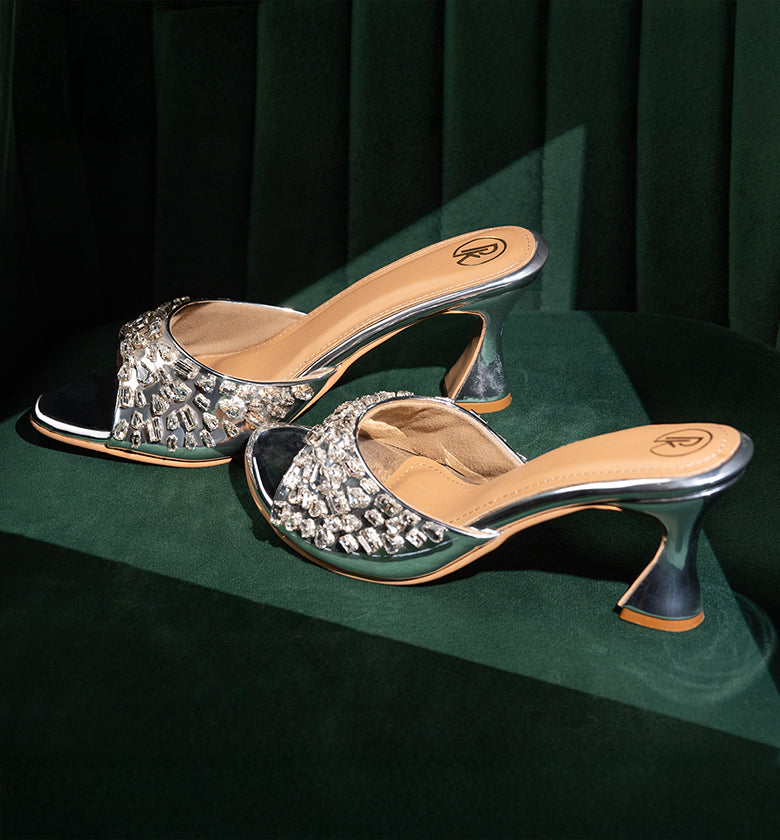
Daytime functions call for lower, sturdier heels in lighter colours, while evening events can carry taller, more ornate styles since standing time is usually shorter and lighting is more forgiving.
Haldi and mehendi mornings are outdoors, often on grass or uneven flooring, which rules out thin heels entirely. Reception and sangeet nights move indoors, onto flat surfaces, where a taller silhouette photographs better and holds up fine.
How do embellished heels differ from plain festive heels?
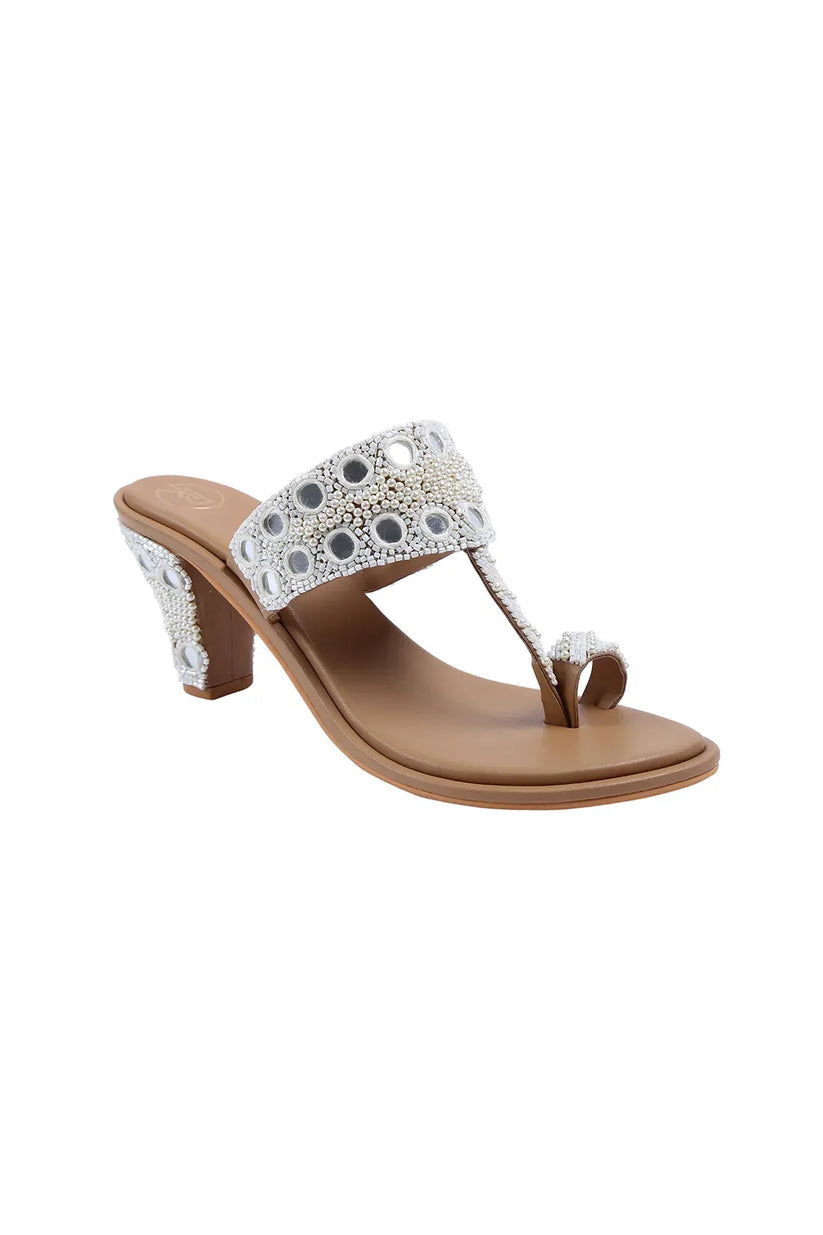
Embellished heels carry visible handwork such as beadwork, threadwork, or mirror detailing, while plain festive heels rely on colour and shape alone. The embellishment is what pushes a heel from formal to occasion-ready.
Both have a place depending on the outfit's own detailing. embellished heels bring beadwork and threadwork into festive silhouettes effortlessly, which works best against simpler fabrics that need the shoe to do some of the visual work.
A heavily embroidered lehenga rarely needs a matching level of detail underfoot. Pairing it with a plainer festive heel keeps the outfit from looking overworked.
Can ethnic heels really be comfortable through hours of dancing?
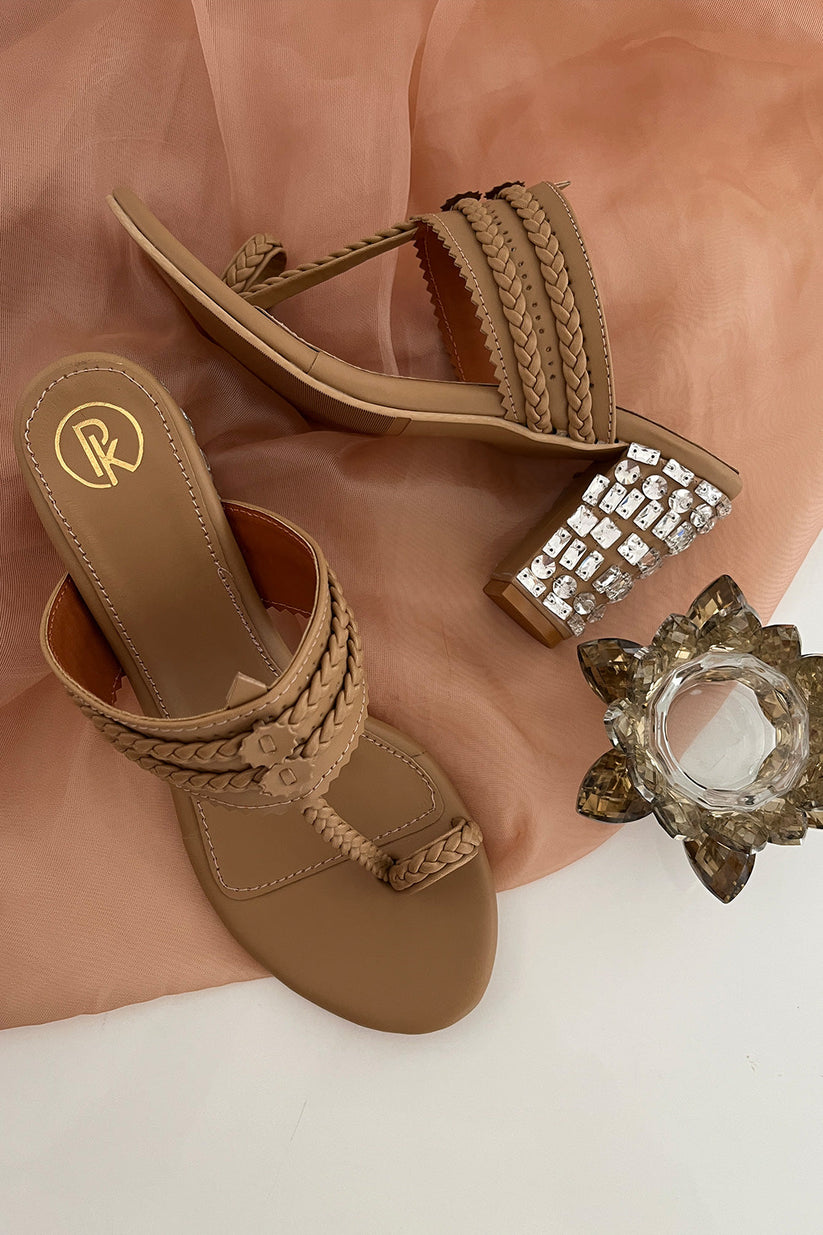
Yes, comfort through hours of dancing comes down to cushioning and heel width rather than height alone. A well padded block heel at three inches will outlast a thin stiletto at two.
Sangeet and reception nights are where this matters most. block heels for women hold steady through long mandap ceremonies, and the same stability carries over to a dance floor once the formal part of the evening winds down.
Kundan Kolhapuri Block Heels
What colour of festive heel works across multiple functions?
Gold, cream, and blush tend to work across the widest range of festive outfits, since they read as neutral against most colour palettes without disappearing into the outfit.
Bright or jewel toned heels look striking in a single photo but limit repeat wear across a multi day wedding. Neutral metallics are the more practical pick for anyone attending several functions with the same shoe.
How should ethnic heels be chosen for a specific outfit like a lehenga or saree?
Lehengas generally hide the shoe under layers of fabric, so height matters more than visible detail, while sarees expose the foot fully and reward a heel with visible embellishment or colour.
Seasonal drops make this easier to plan around. the festive sandals edit rotates seasonal colours and finishes often, giving outfit specific options without committing to a single heel for the whole wedding season.
Are block heels or stilettos better for outdoor mandap settings?
Block heels are the better choice for outdoor mandap settings because the wider base resists sinking into grass, sand, or uneven decorated flooring, where a stiletto heel would catch or tilt.
The traditional Kolhapuri braid pairs naturally with a block sole for exactly this reason. kolhapuri block heels balance traditional braiding with modern lift here, keeping the classic look intact while solving for outdoor terrain.
Frequently Asked Questions
Q: How many pairs of ethnic heels does a wedding guest actually need?
A: Two is usually enough. One low, sturdy pair for daytime and outdoor functions, and one taller or more embellished pair for evening events like the reception.
Q: Are handcrafted heels less durable than machine made ones?
A: No, handcrafted construction often holds up better since each strap and sole is checked individually rather than mass produced. The stitching tends to be tighter and the finish more consistent.
Q: What heel height is safest for long events?
A: Two to three inches on a block or wedge sole is the safest range for events lasting more than three hours. Anything taller starts trading comfort for height fairly quickly.
Q: Can vegan heels look as festive as traditional leather ones?
A: Yes, vegan materials now replicate the texture and finish of leather closely enough that the difference is not visible once beadwork, embroidery, or colour is added.
Q: Do ethnic heels run true to size?
A: Most handcrafted ethnic heels fit true to size, though a half size up is worth considering for styles with a narrower toe box or a thicker ankle strap.
